
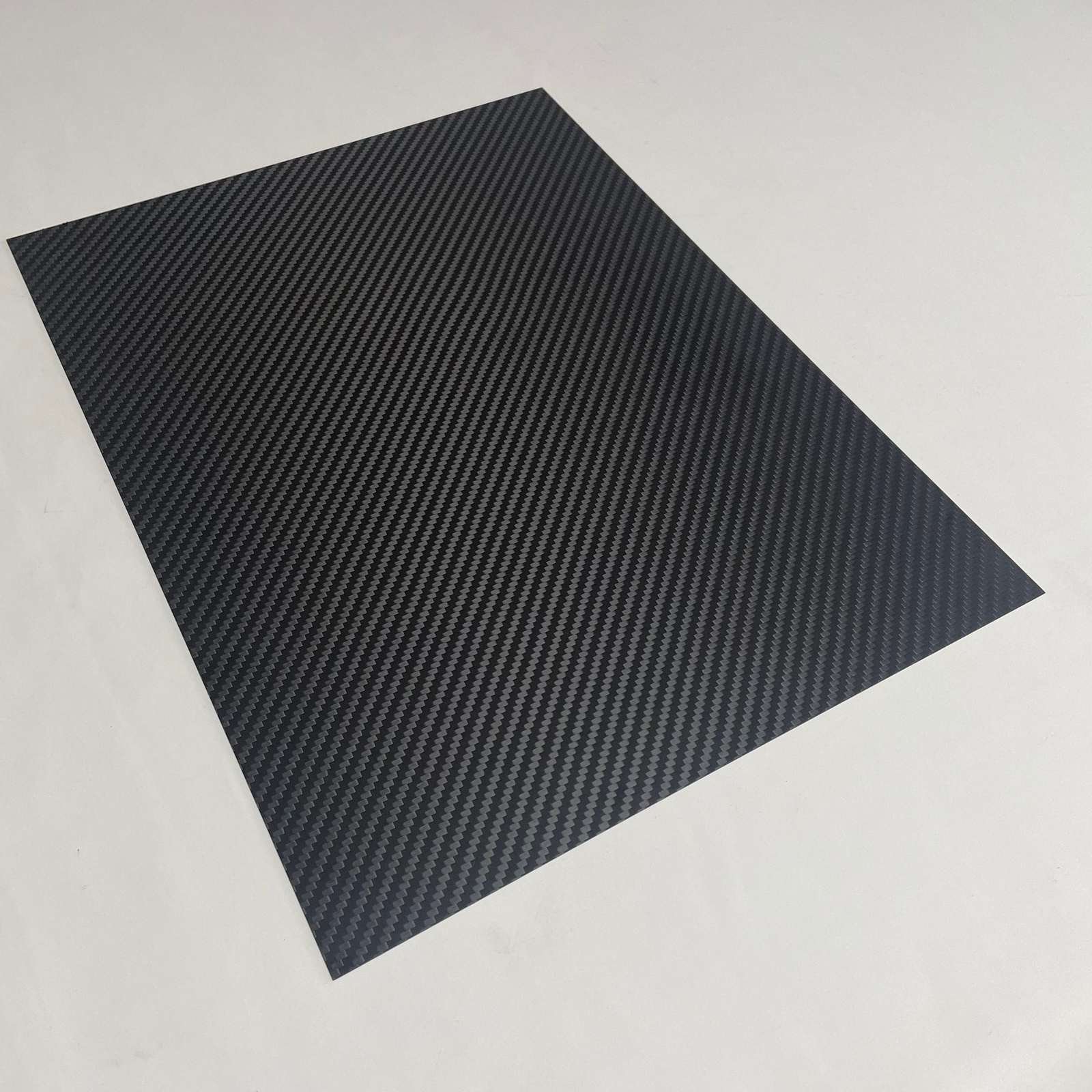
Carbon fiber is not one material – it is a family of materials with very different properties and price points. Understanding the main classification axes helps you avoid over-specifying (paying for aerospace grade you do not need) or under-specifying (getting a part that fails). This article explains how carbon fiber is classified in the industry.
1. Classification by precursor material
PAN-based carbon fiber (polyacrylonitrile): accounts for over 90% of all carbon fiber used today. Best balance of strength, modulus and cost; the default choice for fabrics, prepregs and structural parts.
Pitch-based carbon fiber: made from petroleum/coal pitch. Very high modulus and thermal conductivity; used in aerospace thermal management, satellite structures, and specialty tooling – much more expensive.
Rayon-based (cellulose) carbon fiber: mostly historical; used in niche ablative and insulation applications.
2. Classification by tow size (filament count)
Tow size is the number of filaments in one bundle, written as 1K, 3K, 6K, 12K, 24K and up to 480K for industrial grades:
Small tow (1K–12K): finer surface, easier weaving, premium quality and price. Typical for aerospace-grade fabrics, cosmetic parts and prepregs.
Large tow (24K–480K, “industrial tow”): lower cost per kg, coarser texture, used in wind blades, pultrusion, automotive structural parts and chopped fiber for molding compounds.
Note: modern “large tow” technology has narrowed the gap – 24K/48K tow is now used in many high-volume automotive parts where 12K was standard a decade ago.
3. Classification by mechanical grade (strength & modulus)
Industry grade terminology is usually benchmarked against the well-known Toray® series (used globally as a reference, not as our own product claim). LX Composites supplies equivalent-grade fibers:
Standard modulus / T300-grade: tensile strength ~3.5 GPa, modulus ~230 GPa. General-purpose, low cost, fine for most industrial, sports and consumer parts.
Intermediate modulus-high strength / T700-grade: strength ~4.9 GPa, modulus ~230 GPa. The workhorse of the industry – used in most structural composites, aerospace secondary structures, automotive and sporting goods.
High strength / T800-grade: strength ~5.9 GPa, modulus ~294 GPa. For high-performance aerospace and automotive primary structures.
High modulus / T1100 or M-grade: modulus up to 400 GPa and beyond, lower strain-to-failure. Used in spacecraft, high-end sports (golf shafts, archery), and stiffness-critical applications.
Practical guidance: most buyers only need T700-grade performance. Specify the tensile strength, tensile modulus and strain at failure in your technical datasheet rather than relying on brand names.
4. Classification by surface treatment (sizing)
Sized (sizing applied): a thin polymer coating on the fiber surface improves bonding with a specific resin (epoxy, nylon, PEEK) and reduces fiber damage during weaving. Always match the sizing to your resin system.
Unsized: used in specialty processes or where sizing interferes (e.g. some thermoplastic processes); handle with care because fiber damage increases.
Oxidized/surface-treated: controlled surface chemistry to improve interfacial adhesion for structural applications.
5. Classification by product form
Continuous tow/roving: the base product for filament winding, pultrusion, weaving.
Fabric (woven, unidirectional, multiaxial): for lay-up, infusion, prepreg.
Prepreg: fiber + resin, ready to mold.
Chopped fiber / milled fiber: for injection molding compounds and additive manufacturing.
Short fiber thermoplastic pellets: compounded with PP, PA, PEEK etc. for injection molding.
6. How to specify carbon fiber with your supplier
Define: precursor (PAN), tow size (e.g. 12K), grade/performance (strength and modulus targets, e.g. ≥4.9 GPa / ≥230 GPa), sizing (e.g. epoxy-compatible), and form (tow, fabric, prepreg, chopped).
Ask for the datasheet and, for critical parts, request a certificate of analysis per batch.
Compare price per kg of PERFORMANCE (strength/modulus per kg), not price per kg of fiber alone.
7. How to order from LX Composites
LX Composites supplies carbon fiber woven fabrics, unidirectional fabrics, chopped fiber, and thermoset/thermoplastic prepregs with equivalent T300/T700/T800-grade fibers and custom sizing options. Send us your application and target performance, and we will recommend the most cost-effective grade. Contact us for samples and data sheets.
Related Reading
- Carbon Fiber Fabric Selection Guide — Practical selection for composite projects
- Carbon vs Glass vs Aramid — Reinforcement comparison
Related Products
Carbon Fiber Tows · Carbon Fiber Fabrics
Have a specification to match? Send us the application and process through our contact page and we will confirm what we can supply.