
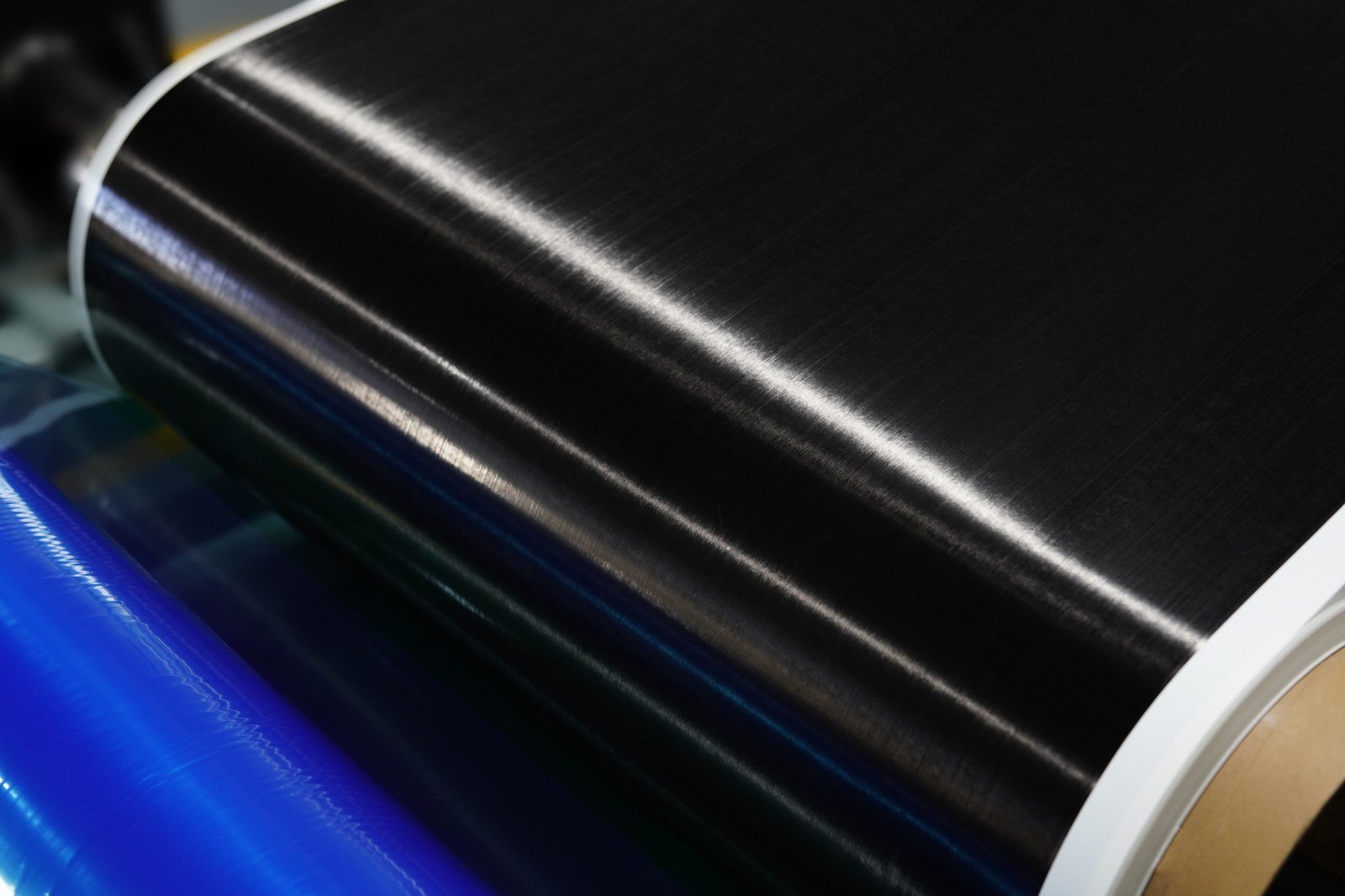
Continuous fiber thermoplastic composites – often abbreviated CFRT (continuous fiber reinforced thermoplastics) or TPC – are made of glass (or carbon) fibers continuously reinforced in a thermoplastic resin matrix such as polypropylene (PP), polyamide (PA) or PPS. Unlike thermoset composites, they are formed by heating and cooling, not by chemical curing. This gives them a set of advantages that are changing how industrial parts are made: short cycle times, impact toughness, weldability and recyclability.
1. What makes CFRT different
In a thermoset laminate the matrix resin cures permanently; in a CFRT part the thermoplastic matrix melts when heated and solidifies when cooled, again and again. That single difference unlocks new manufacturing economics: parts can be stamped in minutes, joined by welding, and recycled at end of life.
2. How continuous fiber thermoplastic composites are produced
The core challenge in producing CFRT is wetting the continuous fiber bundles with a high-viscosity thermoplastic melt. Common production routes include:
Continuous impregnation (melt impregnation): fiber rovings are pulled through a heated die where thermoplastic resin is forced into the fiber bundle. The product is a unidirectional tape (UD tape) – the basic semi-finished material.
Consolidation into laminates: UD tapes are stacked at different angles and pressed under heat to form consolidated sheets/panels with engineered lay-up (0°/90°, ±45° and custom sequences).
Co-woven / hybrid fabrics: thermoplastic fibers are woven together with glass fibers to form a hybrid fabric; during molding the thermoplastic fibers melt and become the matrix.
Final forming: the semi-finished sheet/tape is heated above the melting point, quickly formed in a press (thermoforming or stamping), then cooled in the mold – typical cycle time is 1 to 5 minutes.
3. Key properties and advantages
High impact toughness: thermoplastic matrices absorb energy far better than brittle thermoset resins – excellent for protective parts and crash structures.
Short cycle times: minutes, not hours – compatible with automated mass production.
Weldability and assembly: CFRT parts can be joined by ultrasonic or resistance welding, removing adhesive and fastener steps.
Recyclability: offcuts and end-of-life parts can be reprocessed; PP-based CFRT is especially easy to recycle.
Storage and logistics: no refrigeration, no out-life clock, no frozen inventory.
Chemical and moisture resistance: PP and PA matrices resist moisture, chemicals and corrosion better than many cured systems.
4. Typical applications of glass-fiber CFRT
Automotive & transportation: battery trays, underbody shields, seat backs, parcel shelves, floor panels – light, tough, fast to produce.
Logistics & packaging: reusable pallets, containers, dunnage – high stiffness-to-weight, impact-resistant, returnable.
Industrial: machine guards, covers, tanks, rollers, cable trays, walkways – durable and maintenance-free.
Sports & outdoor: helmets, knee pads, shin guards, luggage shells, snowboard cores.
Construction & infrastructure: formwork panels, temporary structures, rebar alternatives in special applications.
Marine & leisure: hatches, seat shells, lightweight panels for boats and RVs.
5. CFRT vs thermoset composites – a quick comparison
Cycle time: CFRT minutes vs thermoset hours (cure) – CFRT wins for volume.
Toughness & impact: CFRT significantly better.
Temperature resistance: depends on matrix – PA/PPS/PEEK grades can exceed epoxy in service temperature.
Surface quality: thermoset prepreg can achieve premium Class-A surfaces; CFRT usually requires decorative layers or paint for high-end cosmetic parts.
Cost: CFRT semi-finished materials are typically more expensive per kg, but the savings in cycle time, logistics (no cold chain) and scrap often win overall.
Sustainability: CFRT recyclable; thermoset scrap is generally landfilled or downcycled.
6. How to order
When specifying glass-fiber CFRT, define: fiber type (E-glass, S-glass), matrix (PP, PA6, PA66, PPS), product form (UD tape, consolidated laminate, hybrid fabric), areal weight/thickness, fiber volume fraction and sheet size. LX Composites supplies continuous glass fiber thermoplastic tapes and laminates with PP and PA matrices, custom widths and lay-ups, plus advice on thermoforming tooling and parameters. Contact us for samples and data sheets.
Related Reading
- How to Choose the Right Prepreg — Thermoset vs thermoplastic comparison
- Prepreg Storage & Shelf Life — Why thermoplastic prepregs need no cold storage
Related Products
Have a specification to match? Send us the application and process through our contact page and we will confirm what we can supply.