
Industries We Serve
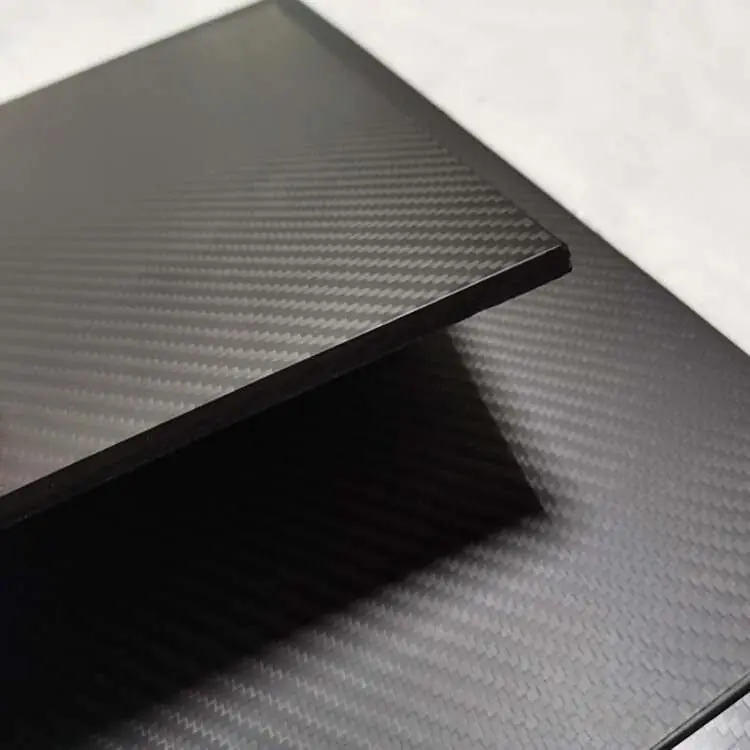
Composite material requirements change completely between industries — a marine part lives in salt water and sun, an aerospace part lives in temperature and fatigue, a consumer electronics part lives in a cosmetic inspection. We organize our materials around those service conditions rather than around our own product categories.
Industry Pages
| Industry | Primary material drivers | Start here |
|---|---|---|
| Aerospace & Defense | Specific stiffness, temperature capability, traceability | Aerospace & Defense |
| Automotive & Transportation | Cycle time, repeatability, cost per part | Automotive & Transportation |
| Marine & Shipbuilding | Moisture resistance, fatigue, UV durability | Marine & Shipbuilding |
| Sports & Leisure | Weight, stiffness, cosmetic finish | Sports & Leisure |
| Industrial & Energy | Chemical resistance, wear, temperature stability | Industrial & Energy |
| Consumer Electronics | Cosmetic quality, thin-section rigidity, EMI | Consumer Electronics (3C) |
If Your Industry Is Not Listed
These six cover most of what we supply today, but the constraint matters more than the label. If your application has requirements from this list — high-temperature service, pressure, wear, cosmetic finish, conductivity, certification — tell us the service conditions and we will tell you whether we have a material that fits. See the FAQ for common starting questions, or write to us through the contact page.
Explore Further
- Company Profile — our manufacturing scope
- Resources — data sheets, guides and FAQ
- Technical Blog — material selection guides
Why the material list changes by industry
The same composite behaves differently depending on what the environment does to it. A marine part lives in salt water and ultraviolet light, so resin choice and finish matter more than peak stiffness. An automotive part lives under cycle time and cost pressure, so the process decides the material. An aerospace part lives in temperature and fatigue, where traceability is part of the specification. A consumer electronics part lives in a cosmetic inspection, where surface and thin-wall flow decide everything.
How to read the industry pages
Each industry page is laid out the same way: the primary material drivers, the products we recommend against those drivers, typical applications, and a short section on how to start a specification. Read the drivers first — if they do not match your service condition, the recommended product list will not either, and a different industry page is probably the better starting point.
When one part spans two industries
Real parts rarely stay inside one column. A marine structural panel with a visible face has both a salt-water requirement and a cosmetic one. A battery enclosure is an automotive part with an electrical-conductivity question attached. In those cases the constraint that fails first sets the material, and the second constraint usually sets the finish or the lay-up sequence rather than the fibre.
Where to start
If the industry is still open, start from products instead and let the specification lead. The processing guides cover how each family behaves in a mould, and contact is the fastest route once you have an application and a process.