
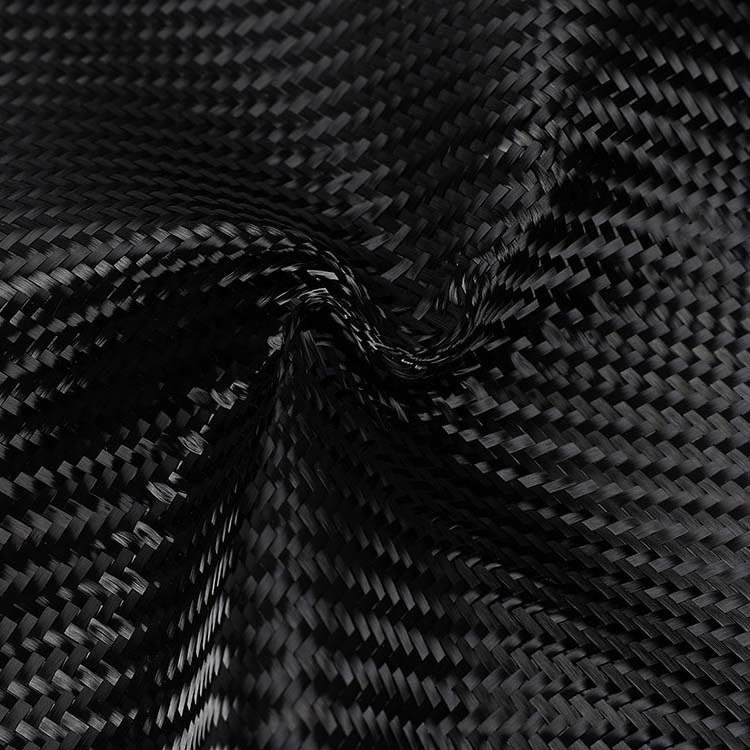
Choosing the right carbon fiber fabric is one of the most important decisions in any composite project. The fabric determines the mechanical performance, the surface appearance, the ease of lay-up and, ultimately, the cost of your part. This guide walks through the four key parameters you need to specify – tow size, weave pattern, areal weight and width – and explains how each one affects your final product.
1. What is carbon fiber fabric?
Carbon fiber fabric (also called carbon cloth or woven carbon fiber) is made by weaving carbon fiber tows into a flat textile. It is the most common reinforcement form for hand lay-up, vacuum bagging, resin infusion and compression molding. After resin is added and cured, the fabric provides the strength and stiffness of the composite part.
2. Choose the tow size first
Tow size refers to the number of filaments in one strand of fiber. It is written as 1K, 3K, 6K, 12K, 24K and so on – “K” means 1,000 filaments. Tow size has a direct effect on the look, thickness and price of the fabric:
1K / 3K – fine, smooth surface, very detailed weave pattern. Preferred for cosmetic parts, small components, drone frames, automotive interiors and accessories where appearance matters.
6K – a balanced middle choice: good surface finish and reasonable cost. Widely used in sports equipment (bicycle components, paddles) and general industrial parts.
12K – coarser texture, thicker fabric, lower cost per gram. Common in large structural parts, automotive body panels, boat hulls and industrial plates where cosmetics are secondary to price and performance.
24K and above – heaviest and most economical. Used in wind energy, construction reinforcement, heavy-duty industrial applications, often combined with resin infusion or pultrusion.
3. Choose the weave pattern
The weave pattern controls drapeability (how easily the fabric conforms to a mold), surface finish and stability:
Plain weave (1/1) – tightest and most stable weave, excellent for flat panels; drapes less easily around complex curves. Best for cosmetic flat surfaces.
Twill weave (2/2) – the most popular all-around choice. Good drape, good surface appearance, less stable than plain but much easier to work with on curved molds. Recommended when in doubt.
Satin weave (4HS, 5HS, 8HS) – very smooth, highly drapable, follows complex double-curvature shapes well. Preferred for aerospace and highly curved parts; slightly more difficult to handle because of its looseness.
Unidirectional (UD) fabric – fibers run mainly in one direction, giving maximum strength along that axis. Used where load direction is known and stiffness is critical (spars, beams).
4. Choose the areal weight (gsm) and width
Areal weight (grams per square meter, gsm) tells you how heavy the fabric is. Typical ranges: 100–200 gsm for cosmetic and light parts, 200–300 gsm for general structural use, 300–650 gsm for heavy laminates and large structures. Higher gsm means fewer layers are needed but each layer is less drapeable. Width should match your mold or roll-cutting plan – standard rolls are 100 cm and 125 cm, but custom widths are available for mass production.
5. Match the fabric to your application
Aerospace & defense: aerospace-grade twill or satin weaves, low-void prepreg-compatible fabrics, strictly controlled quality.
Automotive & EV: 3K/6K/12K twill, good balance of appearance and cost for body panels, interior trims and structural inserts.
Sports & leisure: 3K twill for premium look (bikes, paddles, helmets); 12K for cost-sensitive volume products.
Industrial & energy: 12K/24K plain or twill, heavy weights, economical grades for rollers, covers, tanks and structural reinforcement.
Marine: 12K twill or satin for hulls and decks, combined with proper resin systems for water resistance.
6. Common mistakes to avoid
Choosing a fine 3K fabric for a large cheap part – you pay for appearance you do not need.
Choosing a heavy fabric for a sharp-cornered mold – poor drape leads to wrinkles and voids.
Forgetting that fabric grade, not just pattern, affects mechanical properties – always confirm fiber tensile strength/modulus with your supplier.
Ignoring sizing compatibility with your resin system (epoxy / polyester / vinyl ester).
7. How to order
A complete specification should include: fiber type and tow size (e.g. PAN-based carbon, 3K), weave pattern (2/2 twill), areal weight (e.g. 200 gsm), width (e.g. 100 cm), roll length, and the resin system it will be used with. At LX Composites we supply carbon fiber fabrics from 1K to 24K in plain, twill, satin and unidirectional forms, with custom widths and weaves for volume orders. Contact us for samples and data sheets.
Related Reading
- How to Choose the Right Prepreg — Thermoset vs thermoplastic and the parameters that decide your process
- Carbon Fiber Types & Classification — Precursor, tow size, grade and sizing explained
- Carbon vs Glass vs Aramid — How to choose the right reinforcement for your application
Related Products
Have a specification to match? Send us the application and process through our contact page and we will confirm what we can supply.