
Pultrusion: Profiles, Dies and Lines
Four things we do in pultrusion — profile design, production, dies and equipment. Send a section drawing or a target profile and we work from there.
Pultrusion is the one continuous process that turns fibre into a constant-section profile at speed: rovings are pulled through a resin bath, shaped in a heated die, and cured as they travel. What decides whether a pultruded part works is not the machine but the section design, the fibre architecture and the die — which is why we organise this business in four connected parts rather than selling profiles alone.
Profile design
Section geometry, wall thickness, corner radii and fibre architecture are decided before a die is cut. We review the load case, the fixing points and the assembly method, then propose a section that can actually be pultruded — including where to put unidirectional rovings versus continuous mat or fabric so the profile carries load in the right direction.
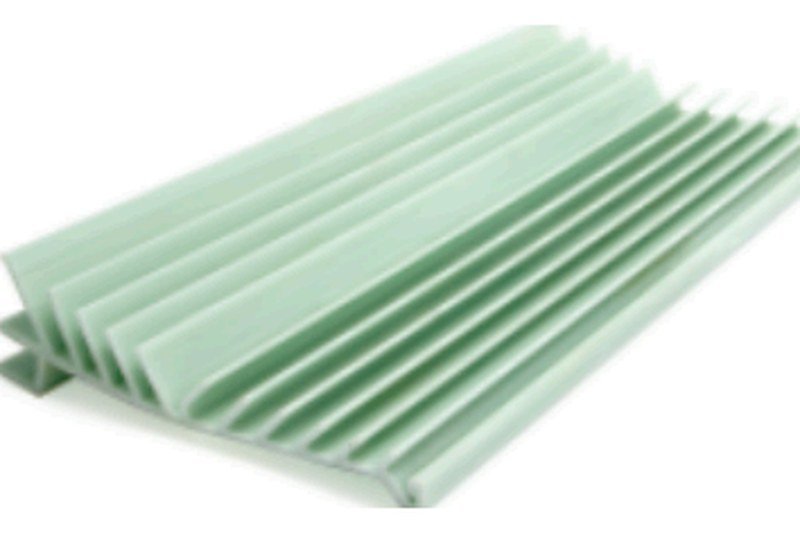
Pultrusion production
Constant-section profiles in epoxy, polyurethane, unsaturated polyester and vinyl ester, with glass, carbon, aramid or hybrid reinforcement. Rods, tubes, angles, channels, flat bars, rebar and custom sections — cut to length and machined where the drawing calls for it.

Dies and tooling
We make the pultrusion dies themselves — injection dies that keep resin out of the bath, and impregnation dies — plus the guide plates and pre-formers around them. Heating zones are matched to the resin system: a die built for a fast-curing polyester will not run an epoxy window unchanged.
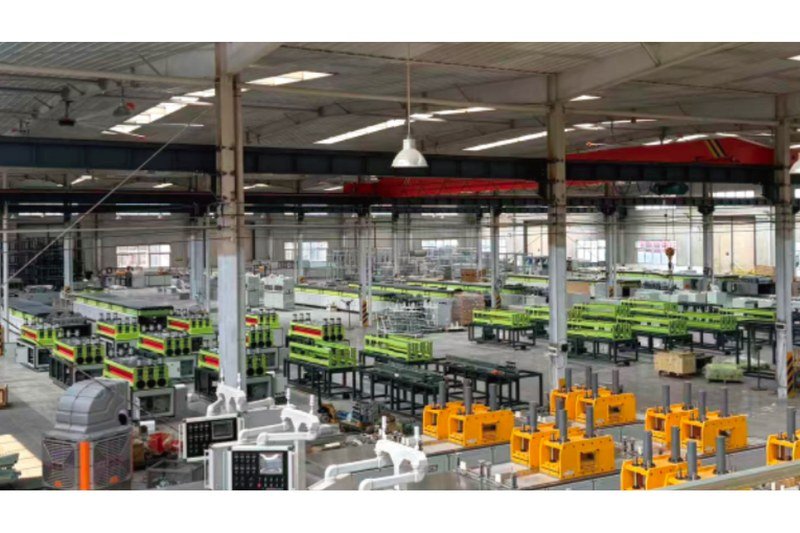
Equipment
Line configuration for pulling, impregnation, heating and cut-off — single or double station, crawler or hydraulic haul-off — including rebar lines and mesh lines. Equipment is specified against the profile and the volume, because the pulling force a section needs decides the rest of the line.
What pultrusion suits, and what it does not
Pultrusion is the right answer for a constant cross-section in volume: structural rods, tubes and profiles, cable trays, ladder rails, handrail systems, stiffeners and window or door profiles. It is the wrong answer for a part whose section changes along its length, for short runs where a die cannot be amortised, and for heavily loaded joints that need local reinforcement in three directions. If your part falls into the second group, a pressed laminate or a moulded part is usually the better route — see carbon fiber laminates and plates.
Reinforcement and resin choices
Glass is the volume reinforcement for pultrusion because it balances stiffness and cost in long sections; carbon is chosen where stiffness or low thermal expansion governs; aramid adds impact and abrasion resistance in the outer layers; hybrids let you buy stiffness only where it is needed. On the resin side, unsaturated polyester, vinyl ester, epoxy and polyurethane systems cover most requirements, and thermoplastic profiles (PP, PA6, PPS) are available where weldability or recyclability matters more than raw stiffness.
Specifications
| Property | Range / option | Note |
|---|---|---|
| Reinforcement | Glass, carbon, aramid, hybrid | Architecture set by the load case |
| Resin system | Polyester, vinyl ester, epoxy, polyurethane; thermoplastic PP / PA6 / PPS | Selected against service temperature and chemicals |
| Profile form | Rod, tube, angle, channel, flat bar, rebar, custom section | Constant cross-section only |
| Section size | Confirmed per project | Set by pulling force and die design |
| Length | Cut to order | Transport limits apply |
| Secondary operations | Cutting, drilling, machining | To drawing |
Items marked “confirmed per project” depend on the section and the reinforcement; send the drawing and we confirm what we can hold.
What to send us
- Section drawing — a sketch with dimensions is enough to start; a DXF is better.
- Load case — what the profile carries, in which direction, and the deflection limit.
- Environment — service temperature, chemicals, UV exposure, fire requirement.
- Length and volume — cut length and how many metres per run or per year.
- Secondary operations — holes, machining, bonding or assembly already planned.
With those five we can tell you whether pultrusion is the right process, what reinforcement architecture the section needs, and what the die and line will look like.