
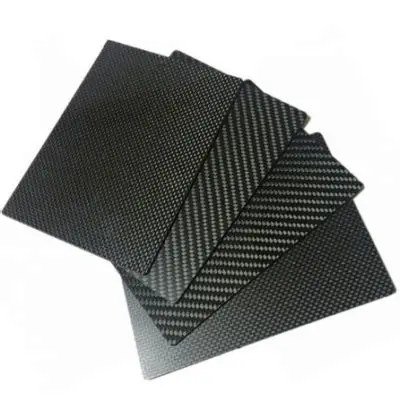
Prepreg is a ready-to-mold composite material: reinforcement fabric or unidirectional fiber pre-impregnated with resin, kept in a controlled (usually refrigerated) state until use. Because the resin is already in contact with the fiber, the clock starts at the moment of impregnation — and how you store the roll determines whether it still performs on the shop floor six months later.
This guide covers what drives prepreg shelf life, how to store it correctly, and how to judge whether material is still good to use.
Why shelf life matters
Prepreg is a reactive system. In thermoset resins (epoxy, phenolic, BMI), the curing reaction does not stop at low temperature — it only slows down. Over months in storage, the resin advances: viscosity climbs, tack drops, and the cured laminate gradually loses mechanical performance.
The practical consequences:
- Tack loss — the prepreg no longer sticks to the tool or the previous ply, causing wrinkles and voids during layup
- Resin flow change — the window for consolidation narrows, and cured thickness becomes harder to control
- Property decay — mechanical performance of the finished part falls below the datasheet values
For production planning, that means shelf life is not a paperwork detail — it is a quality risk that has to be managed like any other process parameter.
What determines shelf life
Three factors dominate:
- Resin system. Epoxy systems are typically formulated for 6–12 months under frozen storage. Higher-temperature systems generally tolerate longer storage but demand stricter conditions.
- Storage temperature. Reaction rates roughly double with every 10 °C of temperature rise. A roll stored at 25 °C can age weeks’ worth in days.
- Time out of storage (“out time”). Once a roll leaves the freezer, it accumulates room-temperature hours. Suppliers specify a cumulative out time in addition to the total shelf life — exceeding either one shortens the usable life.
Storage rules that actually work
| Material type | Recommended storage | Typical shelf life | Notes |
|---|---|---|---|
| Thermoset prepreg (epoxy) | −18 °C freezer (sealed bag) | 6–12 months | Keep the original moisture-barrier bag sealed until use |
| Thermoset prepreg (short out-time) | −18 °C freezer | 3–6 months | Track cumulative out time per roll |
| Thermoplastic prepreg (CFRTP) | Room temperature, dry, clean | 12–24 months | No cure reaction — no refrigeration needed; protect from moisture and contamination |
Two habits make the difference:
- Log every roll. Record the manufacture date, freezer in/out dates, and cumulative out time. When a roll’s history is unknown, treat it as expired.
- Thaw before opening. Let a frozen roll reach room temperature inside its sealed bag (several hours) before opening. Opening a cold bag in warm air condenses moisture onto the resin — a common cause of voids and poor adhesion.
Thermoplastic prepregs: the storage exception worth knowing
Here is the contrast that matters for buyers comparing material families: thermoplastic prepregs do not need cold storage at all.
Because there is no curing reaction to control, CFRTP materials (PP, PA, PC, PPS, PEEK matrices) are stable at room temperature for a year or more, provided they are kept dry and clean. For buyers, that translates into lower logistics cost (no cold chain), simpler inventory management, and less write-off risk from expired material.
If your application involves high-volume production, recyclability requirements, or fast cycle times, this storage advantage is one more reason the thermoplastic family is worth evaluating alongside thermosets — our comparison guide covers the trade-offs in detail, and the thermoplastic prepregs page sets out our CFRTP range.
How to tell if prepreg is still usable
Before committing a roll to production, check:
- Tack. The surface should feel distinctly tacky at room temperature. A dry, non-tacky surface is the earliest warning sign.
- Appearance. Resin should be evenly distributed with no visible dry areas, cracking, or discoloration.
- Flexibility. The roll should drape without fiber cracking or resin powdering.
- Documentation. If the manufacture date, storage history, or out time cannot be verified, do not use it on structural parts.
When in doubt, run a small laminate trial and compare mechanical results against the datasheet — one panel is far cheaper than a rejected batch of parts.
Practical purchasing advice
- Order to consumption. Match order quantities to your production schedule; prepreg is not a stock item that improves with age.
- Confirm the shelf life in writing. Ask for the datasheet statement covering storage condition and expected shelf life for your specific grade — and keep it with the material certificate.
- Rotate stock. Use first-in-first-out and label every roll with its received date and remaining out time.
Get product-specific data
Storage requirements and shelf life vary by resin system, grade and packaging. If you tell us the grade and target market you are working with, our team will confirm the applicable storage conditions and current shelf life for your material — and send the corresponding datasheet.
LX Composites (Danyang Lixing Carbon Products Co., Ltd.) manufactures carbon fiber fabrics, glass fiber products, aramid fabrics and thermoset & thermoplastic prepregs in Danyang, China, serving customers across Europe and Southeast Asia.
Related Reading
- How to Choose the Right Prepreg — Thermoset vs thermoplastic and key parameters
- CFRT Production & Applications — Continuous fiber thermoplastic composites
Related Products
Have a specification to match? Send us the application and process through our contact page and we will confirm what we can supply.